The threat facing Australian road racing
This article was written by student journalist, Luke Richert.
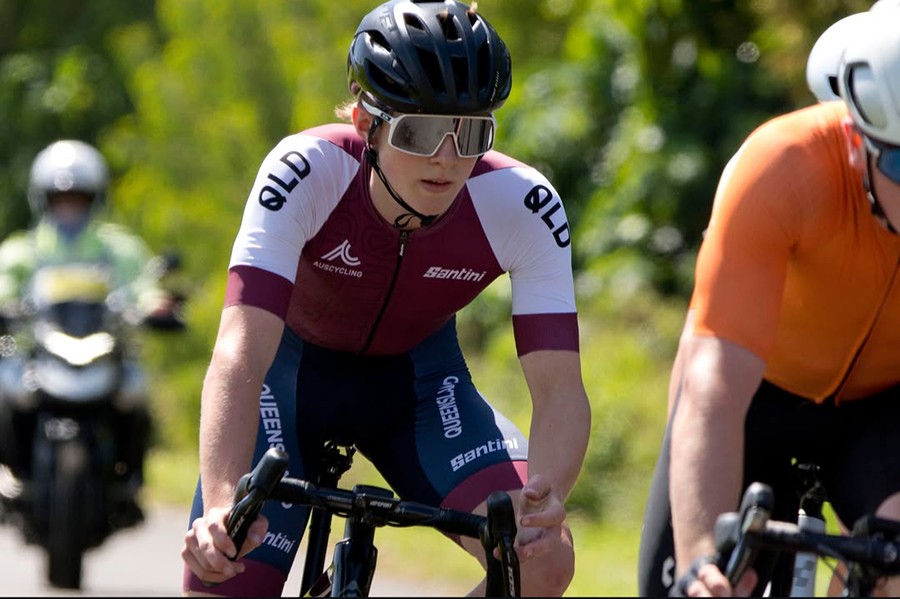
Reilly Dickson is a 15-year-old cyclist from the Gold Coast. When he is not at school, he is usually riding his bike. Most weeks, Reilly spends upwards of 12 hours training for races. His big goal for this year was the AusCycling Junior & Masters Road National Championships, which were held on the Sunshine Coast, in his home state, from 17-20 September. Reilly spent months preparing for “Road Nats”, as the cyclists call it, but the event did not go ahead as planned.
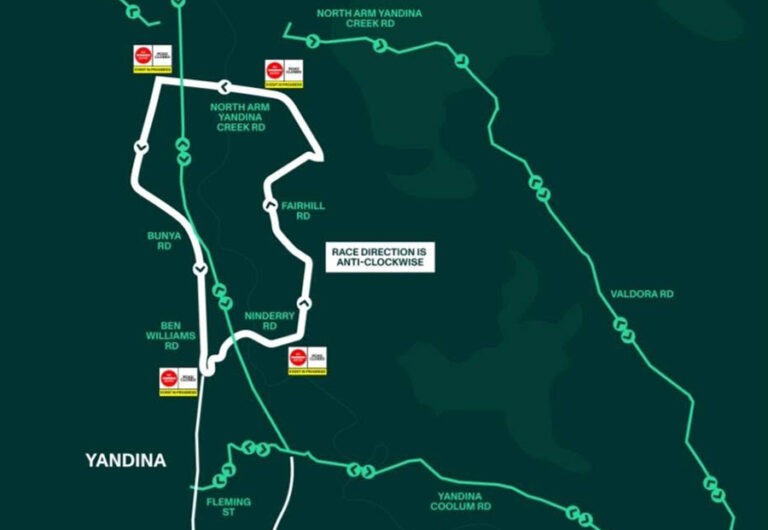
A fortnight before the Championships, on 4 September, AusCycling – the National Sporting Organisation for all cycling disciplines – released a statement notifying members that despite the six months of planning, “significant community backlash regarding the proposed road closures” resulted in their permit being denied by the Sunshine Coast Council. Consequently, the road race (cycling’s premier event) had to be significantly altered. The original Yandina circuit, hilly and selective, was quickly scrapped for a flat and technical closed circuit at Corbould Park. Riders got safe but limited racing, and the wider community was free to use the roads. While this may seem like a win-win, the loss of the original course reveals a far greater threat facing Australian road racing.
Genuine road racing requires long, open, challenging courses to help separate the best riders from the rest. For riders like Reilly, success in road races, particularly the national championship road race, is crucial for development and the realisation of their long-term goals. The alternative Corbould Park circuit could not offer them that.
“I was disappointed [when they changed the course] because it looked like such a good course with all the hills up in Sunny Coast,” Reilly said. “They just changed it to this dead flat, nearly a crit [criterium] course basically, which is a really big letdown.”
“A different course, it could have suited a lot more climbing riders. They really had no opportunity at nationals, and yeah, the big teams really look at your results at these types of big events, and if you can’t perform because the courses aren’t suited, then there’s not really much you can do.”
“You really need these long races to set you up for the big races in Europe,” he said.
For developing riders looking to turn professional, success on the European racing circuit is the best way to get noticed by professional teams and national level races are the closest thing aspiring riders like Reilly can get to the intense and high-stakes racing of the elite peloton that awaits them in a few years.
Head of Events at AusCycling Carlijn Kerdijk says it’s important therefore that national championships are challenging.
“If a national championship doesn’t test climbing and endurance, it doesn’t identify the riders who can do what’s asked of them internationally,” Ms Kerdijk said. “Junior world championship courses have serious elevation. We need a National Championship course that offers something comparable.”
So how is it that a national championship event, with possibly career-launching stakes, was effectively shut down by residents?
Yandina & District Community Association President Marie Reeve said that the issue flared up when three weeks out from the event residents were notified via a letterbox drop that they would be unable to use the roads on which the riders were racing for nine-and-a-half hours on both Saturday and Sunday. Within days of the news, the Yandina community rallied together, contacting the Sunshine Coast Mayor Rosana Natali, to block the approval of AusCycling’s racing permit.
“It’s an example of the community just standing up for themselves,” Ms Reeve said.
“It’s very inconsiderate. It’s rude not to tell people who are directly affected that they cannot leave their property or even that this event is going to happen, and they’ll be somewhat inconvenienced,” she said.
Yandina’s local councillor, David Law, said that a lack of community engagement was likely to blame for the backlash.
“From that initial communication the relationship of AusCycling and the community, from my perspective, just never recovered,” Councillor Law said.
“Usually everyone’s fine with it, but this was just way over the top,” he said. While the area has hosted several state-level races in the past, the extent of the road closures for Nationals was simply too extreme, and the communication too late, for the community to accept.
Earlier this year, the Sunshine Coast Council cut 130 jobs, however Councillor Law said it is unlikely the lay-offs had any impact on the event organisation.
While it is rare that an event of this scale is so significantly challenged, this is not a stand-alone incident. Ms Kerdijk says that clubs around the country have been losing road race circuits for decades.
“Councils are more cautious about closures than they were five years ago, and communities that would once have shrugged at a road closure now object to them,” Ms Kerdijk said. “There’s a real risk we end up racing on tight circuits more and more.”
Road racing logistics are becoming increasingly obstructive. Traffic management and road closures account for 32 per cent of AusCycling’s annual budget, and Ms Kerdijk says that cost doesn’t scale down for clubs, who can barely afford to hold local road races on their limited budgets and volunteer committees.
“The downstream effect on juniors is that they arrive at a national championships with less road racing in their legs than a generation ago,” Ms Kerdijk said.
Grassroots racing is therefore facing an existential challenge. With the 2028 UCI Para Road World Championships and most probably the Olympic Road Race heading to the Sunshine Coast, communities in the region will have to prepare for greater inconvenience, and organisers for stronger community engagement.
Head of 2032 Games Coordination at Sunshine Coast Council Grantley Switzer says that success will depend on balancing world-class sporting requirements with the needs of residents, businesses and visitors.
But even if the events do run smoothly with community backing, will the challenges facing road racing have Australian riders like Reilly ready to perform?